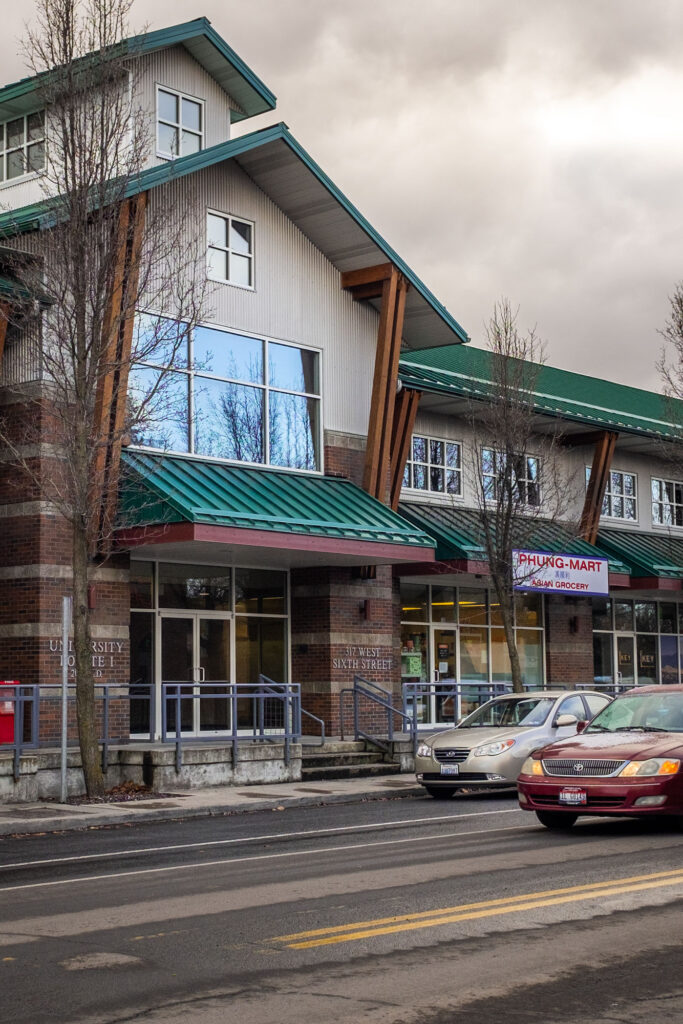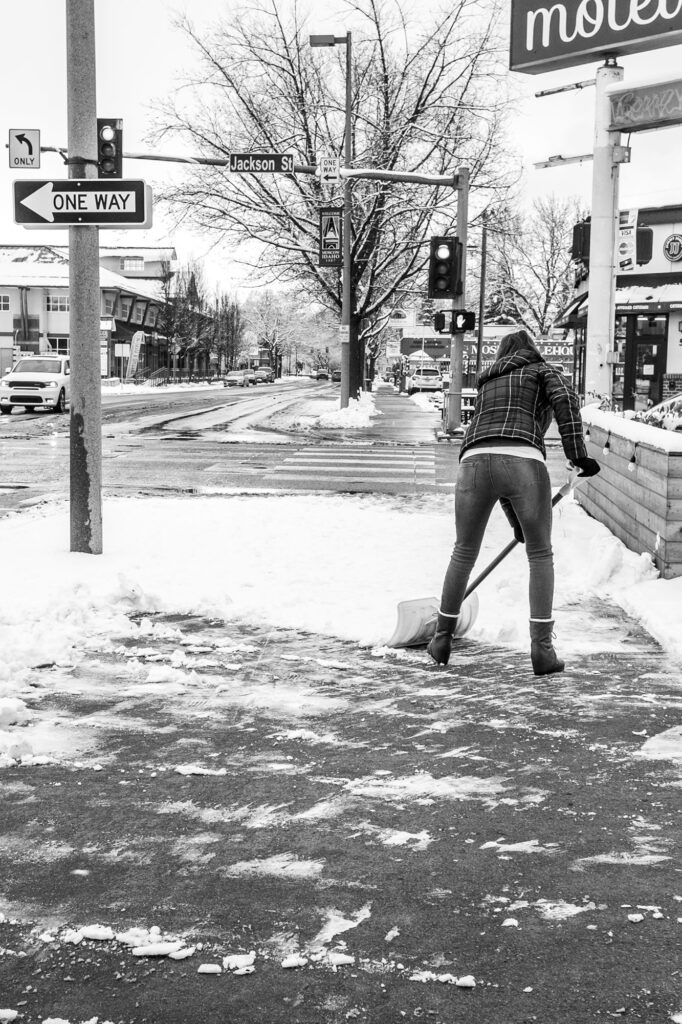
Between the fences
A tumbleweed bounces by
The whistling pigs

Between the fences
A tumbleweed bounces by
The whistling pigs

The garden spring peas
Push through the crusty soil
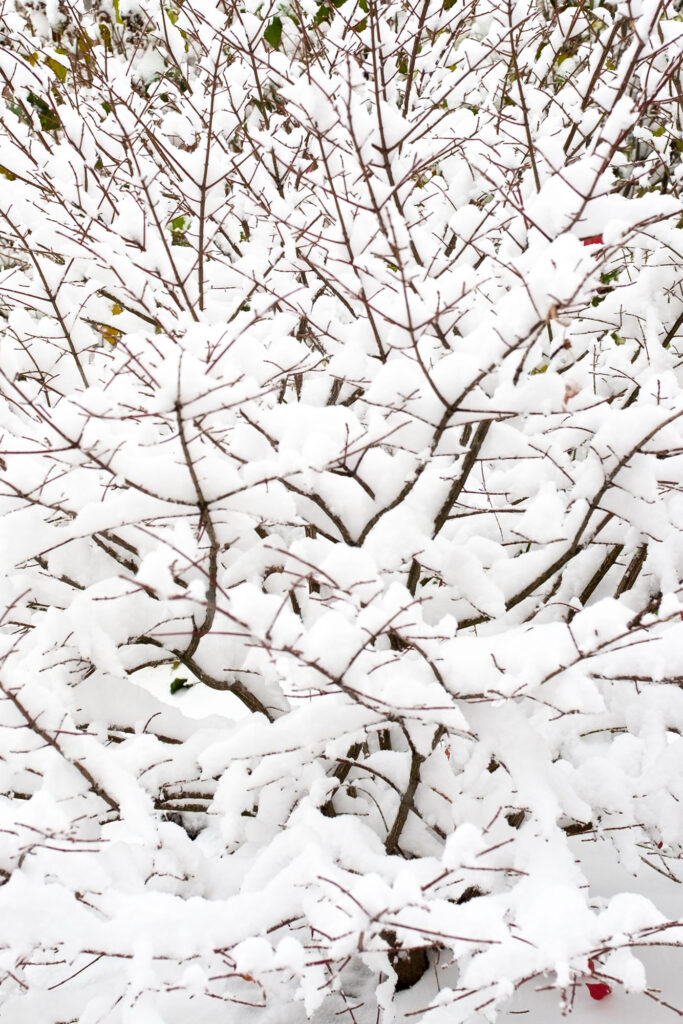
An unhurried voice

Against a white sky
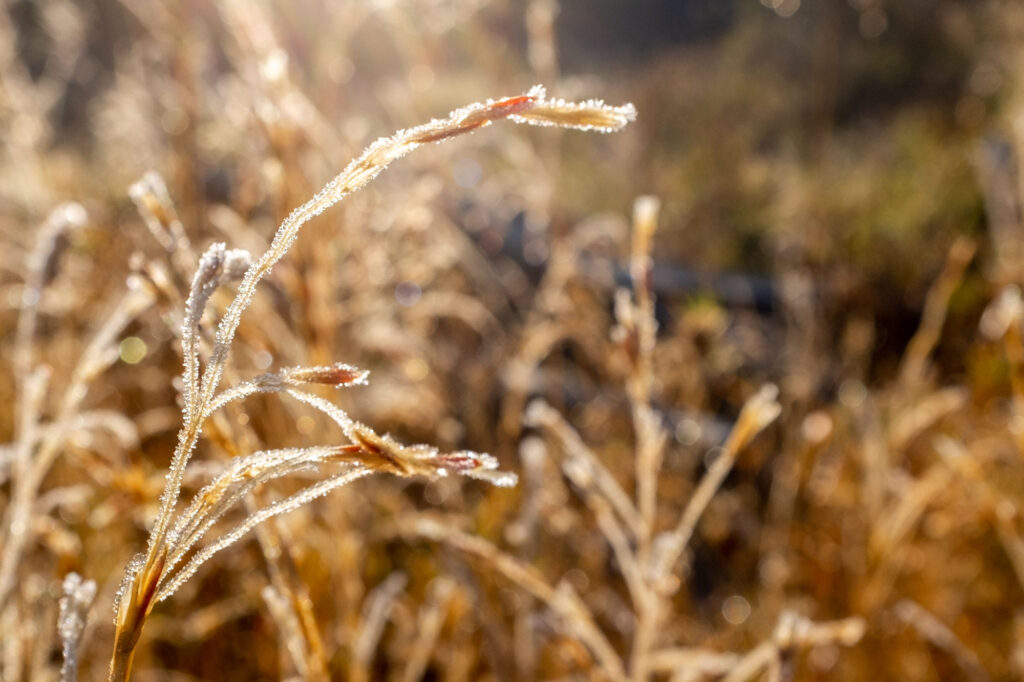
A Weeping Pussy Willow
Swipe of an ink brush
In a comment in my latest post, my friend Nicole congratulated me on the birth of my first grandchild. I am so happy for my daughter and son-in-law and their bringing a beautiful life into this world. I am grateful they are all home and resting.
I wrote the following haiku in response to the timing of my grandson’s birth and how practicing social distancing and the limitations created by the COVID19 pandemic has affected our culture. I did this after I was made aware of an artist project titled “Social Distance, Haiku and You.”
Grandson through pictures
Our sick dying all alone
An ache in the heart
Here is a link to the website:
Social Distance, Haiku and You

This week I’ve been asking myself, what is the best way to prepare for something?
For example at work I prepared to work remotely from home. Our team prepared for the “problems” we will face to make our transition easier and took steps to resolve them. No one could think of anythings else; we were good to go. However, in reality, the self preparedness did not foresee most of the challenges that arose. Some of the preparedness helped, but most of the problems that came up were ones that were not realized ahead of time. They were unpredictable. Each team member’s problems were unique. They ended up working through their “problems” on their own. The result benefited the team.
My thoughts are about the effort and time I put into preparing for something that may or may not happen. These thoughts remove me from the moment at hand. As a result, I lose the truth of the moment and the ability to be present. I prepare to feel safe only to feel unsafe because I’ve set myself up for a perceived outcome, trying to predict the unpredictable.
Anxiously walking
In the park the old willow
quietly waiting

The Red Maple blooms
Open in the spring day sun
Inviting a guest

Water ponds on stone
Raindrop ripples the surface
Vanishes from sight

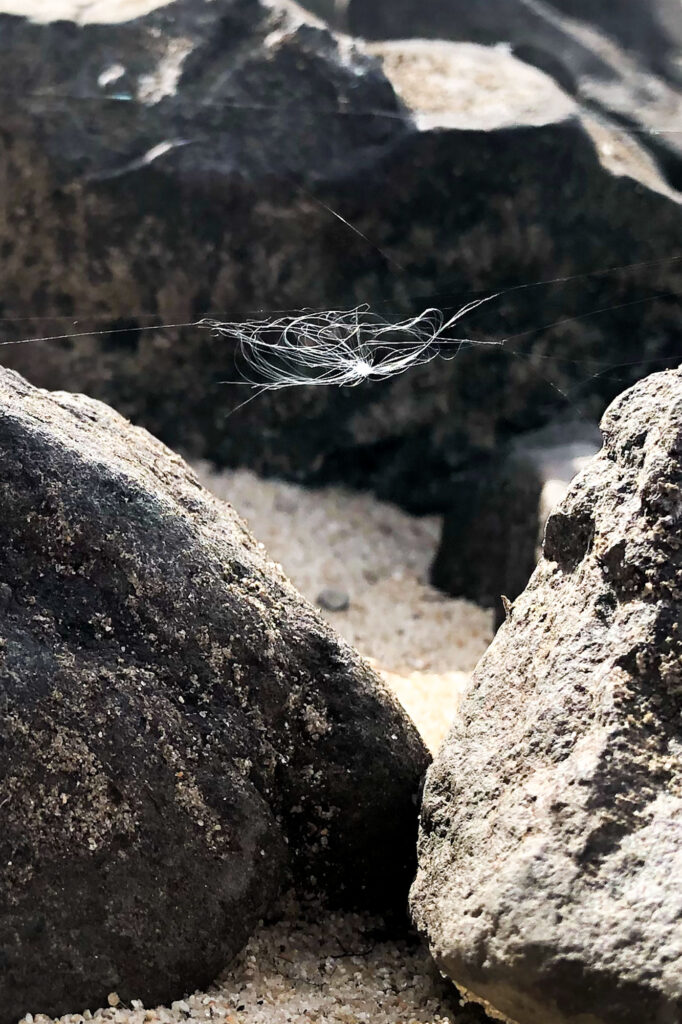
Hanging by a thread
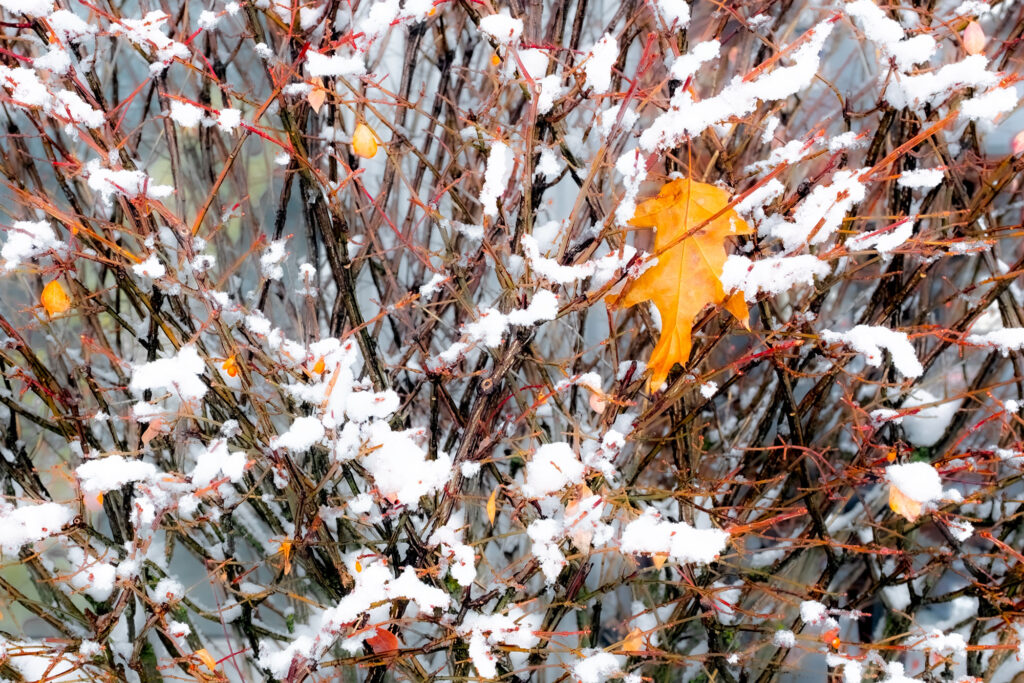
A teasel takes on spring snow
Already broken

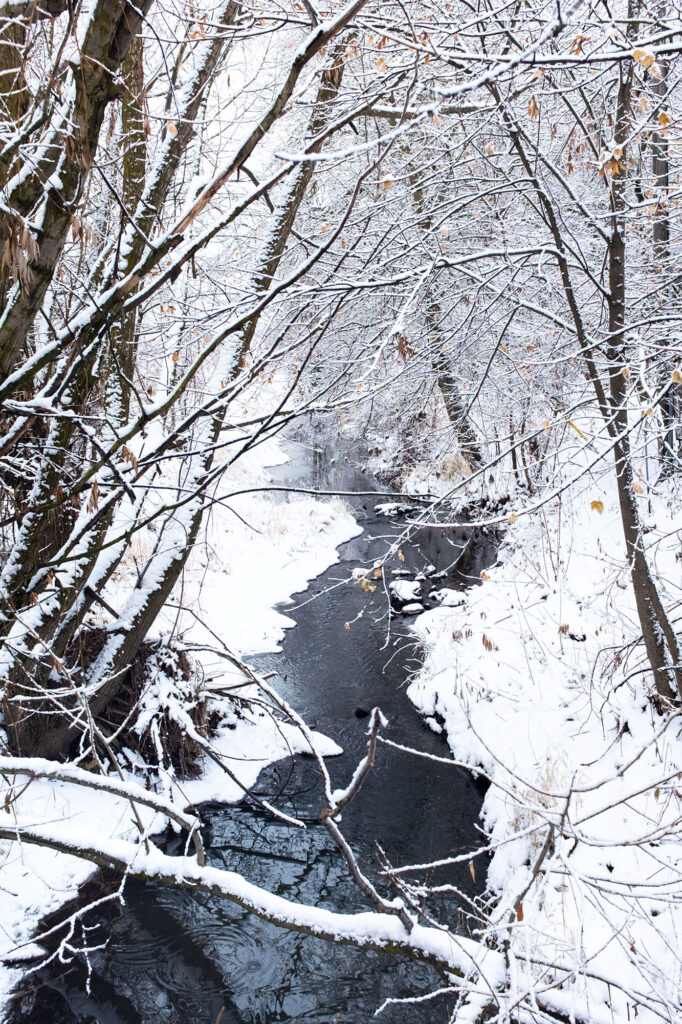
melting snow on edge
layers embedded with stone
roaring waterfall

cool quiet morning
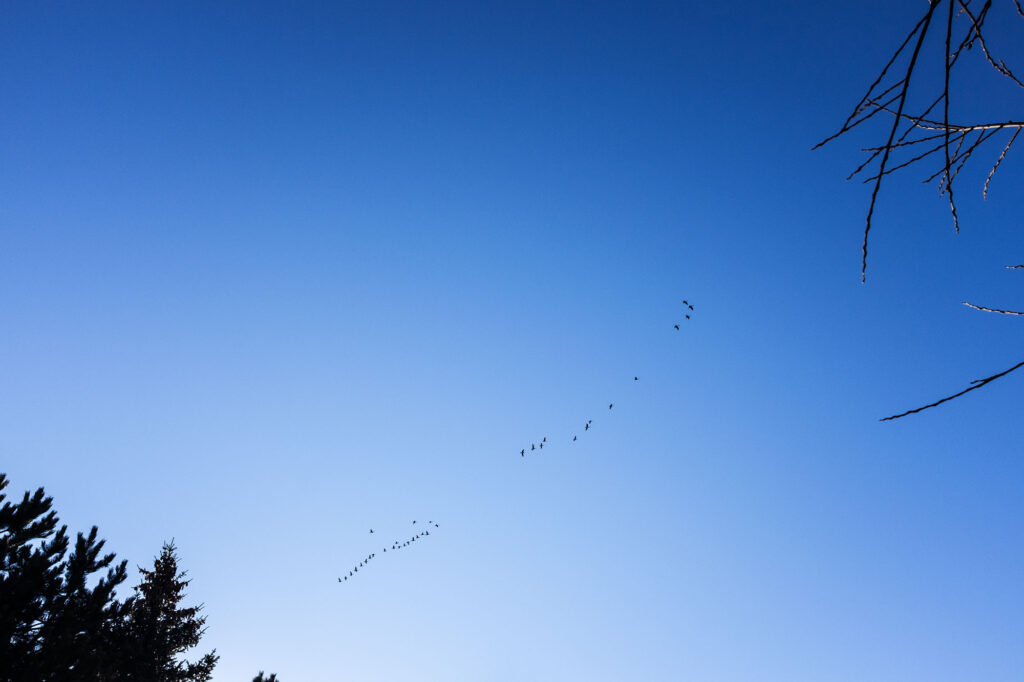
flock of birds above full moon
light as a feather

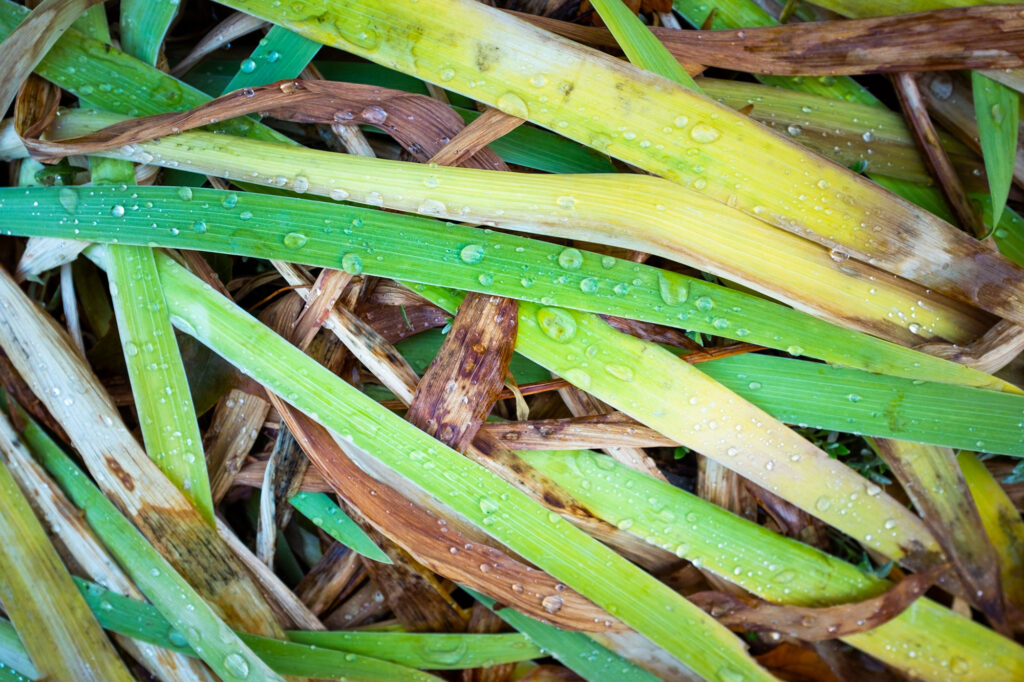
moist patches of green
peeking through winter stubble
welcome this spring rain

The person in the photograph featured is Logan, a local university student. On Fridays, he stands on the corner of 3rd and Washington Street, bringing an awareness to drivers and walkers passing by about climate change. He has been doing this since he organized our local Climate March on April 12, 2019, or possibly longer.
Another person who invested time in increasing awareness who I met recently is Peter. He is author of the book ‘Healing the Big River, Salmon Dreams in the Columbia River Treaty‘. Peter drove the entire length of the Columbia River, from the headwaters at Canal Flat Canada to the Pacific Ocean at Ilwaco, Washington. The book is a photographic document alongside essays of those he met along the way. Here are two quotes that touched me:
“In the summer some 80 years ago, my grandfather went to the shore near the Windemere to greet the return of the salmon. Days went by, then weeks, maybe a month. No fish. What is wrong? My grandfather wondered if the creator was angry for some reason. We did not know about the building of the grand Coulee Dam that stopped our salmon from coming home. We are still waiting.” -Alfred Joseph, Chief of Akisq’nuk First Nation.
Peter Pochocki Marbach Healing the Big River, Salmon Dreams in the Columbia River Treaty (Brown Printing Portland, Oregon, copyright Peter Marbach 2019), 26
“My generation will be some of the last people to know glaciers on the mountain peaks. We will be some of the last to love many oceanside places. Some of the last to remember summers not consumed by wildfire and choked by smoke. Some of the first to get used to the term ‘climate refugee’. My generation will be one of the last to have lived in a time before this loss became – to some degree – inevitable” -Graeme Lee Rolands
Peter Pochocki Marbach Healing the Big River, Salmon Dreams in the Columbia River Treaty (Brown Printing Portland, Oregon, copyright Peter Marbach 2019), 45
Peter brought to me an awareness of how our actions today affect not only people here now, but also our future generations. He also brings to our attention that the U.S. State Department and Global Affairs Canada are engaged in talks that are aimed at updating the Columbia River Treaty. He is getting the message out that there is now an opportunity to make our voice heard for the people who depend on the salmon runs and the river.
I am grateful for Logan’s and Peter’s actions. They serve as a reminder to stop and pay attention every day, to not give up and continue to do my part, and to realize the effect of each action I take on our earth and the community that depends on it.
bird song, winter? spring?
snow drops sprout in snow removed
morning alarm rings